1994 - Page 7
Ollerton Was Closed 1994, After 69 Years
- Continued -
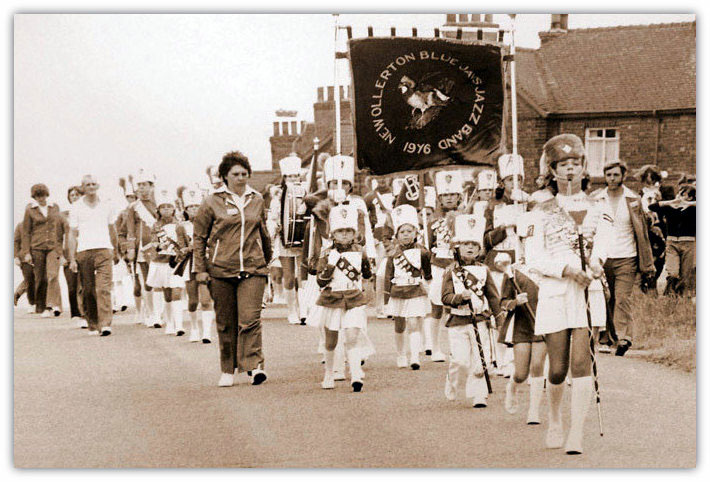
Ollerton Blue Jays
- The amount of investment put into the mine over the years gave excellent returns eventually. A massive maximum profit of £17.18m was achieved in 1989-1990
- The colliery was the last to be sunk by the Butterley Co some 10 miles North East of Mansfield and the Top Hard seam had been worked from 1925-1979, by 100 districts or panels producing about 37m tonnes
- Exploratory headings had been made into the Dunsil seam in 1927 through a fault from the Top Hard horizon, but not exploited
- Exploratory headings were made in the Main Bright seam during 1943-1946 with a pit bottom access made from shaft insets. However the working was wet due to close proximity of the Permian measures
- Abandonment plan No EM1145 was deposited in 1979 by me along with the Top Hard Abandonment plan No EM1135
- Examination of the headings and check measurements and levellings were carried out by me and a plan constructed using the original surveys for the Main Bright seam, as the plan should have been deposited earlier, i.e. 1948, within 15 months of discontinuance or 3 months after abandonment!
- The Parkgate seam about 180 yards (165m) below Top Hard was accessed in 1976 by steep cross measures drifts of 1in6 and 1in5 from the Top Hard seam pit bottom area, and had produced 19m tonnes from 19 panels
- There had been around 20 underground heatings over the years
- In the early days sand packs were put on, and later, the packs were buried in the main gates to combat such possible events, however this system was dispensed with when using the newer modern machine way of mining
- The workings were relatively deep at about 750m with an effective temperature of 27.2 C

Ollerton Pit Cyclists
Costs for the mine during 1979-1980 are listed:-
- Wages £6m
- Depreciation £0.7m
- Materials £3.7m
- Plant pool (for machines etc) £1.9m
- other colliery expenses £0.6m
- Repairs £0.3m
- Wages charges £2.7m
- Area overheads £0.65m
- HQ costs £0.9m
- Salaries and expenses £0.5m
- Social costs redundancies etc £0.07m
- Total costs for colliery £18.8m
- Profit £10.66m
- OMS 4.04 tonnes
- Men on books average 1,076
- output 988,373 tonnes
- Coal price £33 per tonne
- 12 miles of roadway open underground
- Colliery surface lands 250 acres
- Tips 180 acres
- Operational land 70 acres.
- The coal reserves for the colliery were estimated at 20m tonnes of Parkgate at 1.85m thick ave
- Main Bright 10m tonnes, ave thickness 0.9m, but with a friable roof and probable water
- Dunsil / Waterloo 10 to 15 m tonnes, but the seam would split
- Deep Soft 10m tonnes at 1.2m ave thickness but Blackshale reserves at app 1.5m thick was still to be assessed. The problem as I see it is that the quality of the coal would not be good or the thinner seams although of good quality would be unworkable or unprofitable.
- Manpower just before closure:-
- 614 underground
- 99 surface, plus
- 133 underground
- 53 surface private contractors (total 899).
When comparing numbers of men employed at the mine, it must be noted that numbers of private contractors must be added to British Coal numbers to give a similar comparison with number of employees of the past.
- The remaining Parkgate seam reserves were transferred to neighbouring Thoresby colliery (finished working at the end of 2010). I will always believe that Ollerton was sacrificed to allow Thoresby to have a far longer life because their reserves would soon be depleted.
- The main reason given for closure of the mine was the condition of the shafts that would need major repairs due to brickwork bulging etc as the Colliery was never on the closure list.
- Around 70 surface and underground borings over the years had proved large areas of reserves in several seams including the combined Dunsil/Waterloo and Deep Soft seams as well as up bores to the Main Bright seam.
- Two large capacity underground vertical bunkers were constructed.
- At closure in 1994 there were no connections. However during 2001 twin drivages from neighbouring Thoresby colliery successfully thirled (i.e. broke through), into the north side Parkgate workings at Ollerton, and a bearing check on theodolite bases that I had established whilst Surveyor there were to a few seconds of arc, a very satisfying result and plans were to work the remaining reserves from Thoresby via these roadways beginning production in 2003.
- During 2002 preparation work continued to prepare for production by scufting out the old roadways.
- In times of low barometer excess methane gas seeping from the old workings became a problem.
- Surface works over the years included changing from overhead Aerial and McLane pyramid-type tipping, to layer tipping by transporting dirt up the tip by steam engine and Jubilee side tipping wagons to 1983 and spreading by bulldozer, later changed to layering by TSR dumper loaders from a dirt bunker, and consolidation of the waste 1970s
 Experiments were carried out to test slurry pond bank stability etc by boring vertical holes and then monitoring for water levels using Piezometers ** Experiments were carried out to test slurry pond bank stability etc by boring vertical holes and then monitoring for water levels using Piezometers **- Silverbirch trees were set as an experiment in the 1960s at the Harrow Inn end of the tip and proved successful. Later grassing of many acres of disused areas and assorted tree planting created a far pleasing result than a grey waste heap for the occupants of the estate opposite
- During 2002 a Park area with walkways was created on the old tip site
- When the Pithead baths and Canteen was opened 1954 the pit yard was finished off with areas of gardens set with roses, however these were removed in the late 1970s when the emphasis on keeping un-concreted or tarmacadamed areas clear by covering them with limestone chippings for low or nil maintenance
- About 30 gallons per minute of underground water was pumped at No2 shaft from Top Hard pit bottom from 470m deep and discharged into Boughton Dyke
- Two pairs of the old Official’s houses ‘the 10 Commandments’ as they were known as were demolished and a roundabout constructed on Forest Road giving a good access to a Shopping complex and industrial units and offices that now cover the old pit yard site.
-

The local community has transformed the former Ollerton Colliery into an energy-efficient town
Sherwood Energy Village on the site of the 91 acres old Ollerton colliery site had taken a year to prepare for the commencement of building
- The colliery closed in 1994
- The project, the only one of its kind in Europe was planned to create an environmentally sustainable development for 80 houses, industry and park land. It was hoped that the houses would be self-sufficient in energy, water and sewage needs. The Minister for Trade and Industry, Stephen Byers MP (Lab) had officially opened the start of the earthworks in February 2002. It was thought that up to 800 jobs could be created by encouraging industry and shops into the area where there was a surplus of young people needing jobs.
- The last of the ‘temporary’ sinkers bungalows built adjacent to Newark road in 1923 was demolished in 1978!
- Ollerton Hall, vacated by Lord Savile’s Estate Agent for the Manager Montagu Wright in the 1920s, fell into disrepair after he left in 1946 and although occupied for a while and used as a ‘Home’ now stands empty and boarded up and a sorry sight of its former glory. Plans over the years to restore it are still in abeyance.
- Miners’ houses offered for sale to sitting tenants from £2,700 - £3,250 were on the market for between £89,000 and £114,000 (year 2005).
- Men were transferred from Newstead colliery on closure in 1988 and from Blidworth and Gedling in 1989, replacing men who had taken early retirement.
- 33 miners were transferred from Creswell in 1991 when that pit closed, but being used to working in a thin seam, Threequarter 2’ 3” (0.68m thick) they could not get used to working in a thick seam Parkgate at 6’ 6” (2.0m) and 32 of them left.
- The colliery took part in ‘Children in Need’ run.
- 41s Parkgate panel won the National Underground Safety Competition 30/3/1993.
- On 12/9/1993 it was the Pit Gala Day, successful but very wet.
- The Red Brick house on Newark Road was used by the Estates dept until taken over by George Slaney as a wood yard. However it would fall into disrepair after he left.
(Note: see the small plans previously in 1932 showing the initial development of the pit.)
** Click Here For More Information About Piezometers |


