When the shift was over they would do the same in reverse, having a bath in the meantime of course.
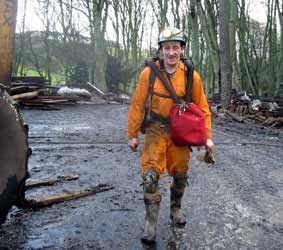
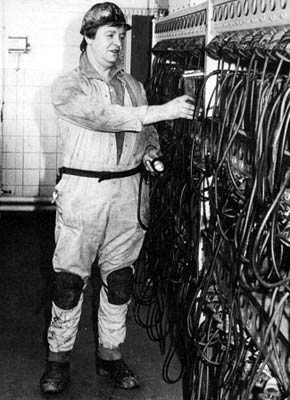
As temperatures varied from pit to pit and even in different parts of the same pit, clothing would also vary. At the shaft bottom of a downcast shaft, this was where the fresh air was drawn down. In winter times men would wear thermal underwear and extra layers of clothing. While in hotter parts of the mine the clothing worn would be football shorts, boots and stockings.
Footwear was also an element of clothing. Prior to the hobnailed boots, were the clogs, and then the more modern boots had extra hardwearing rubber soles plus steel toe capped Wellingtons for working in wet conditions.
A miner's basic tools were a pick and shovel, many got the pit blacksmith to make one of the pick blades, into a hammerhead in order to set, or knock the wooden props.
As holes had to be bored into the solid coal and rock, for blasting purpose, drilling machines and drill rods had to be used. Compressed air and some with electric power drove some machines.
With the introduction of hydraulic props a special key was made to pump the prop up tight to the roof and was released with the same key.
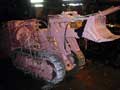
As time progressed and coalmines became mechanised, large machines were manufactured, not only to produce coal and transport it out of the pit, but also to make the roadways.
Armoured face conveyors were used with a power-loading machine mounted on it and this traversed the coalface cutting and loading the coal onto the conveyor.
Hydraulic powered supports were attached to the conveyor; these not only supported the roof they had an internal ram that pushed the conveyor over to the coalface after the machine had cut and loaded a strip, one metre wide. When this was done the support was lowered from the roof, the ram put in reverse, and this dragged the support up to the conveyor and set once more to the roof, thereby supporting that exposed roof the machine had created.
Also with the introduction of machinery and electricity, craftsmen in this type of work required their specialist tools.

Hydraulic powered supports
Shift Work
Pits varied the times of their shifts, but in the main they all worked Days, Noons and Nights. In the early days of coal mining, men, women and children worked long hours.
|


 What clothes a miner wore, what equipment, tools, machines were used and what time did the day's nights and after shift start and finish.




 Dearne Valley Colliery was a surface drift mine sunk in 1901.


