Explosions, although dramatic in the number of victims they claimed, accounted for fewer than 17 percent of the deaths.
Analysis of these grim statistics showed that sixty per cent of the victims were lolled before reaching the age of 30.
Eighty per cent died before the age of 40.
In addition, living conditions throughout the mining communities of Glamorgan were appalling.
Hastily erected dwellings soon became hopelessly overcrowded, while sanitation, where it existed at all, was primitive.
With such an ideal background for the proliferation of virulent bacteria, disease and death soon came to these densely populated communities.
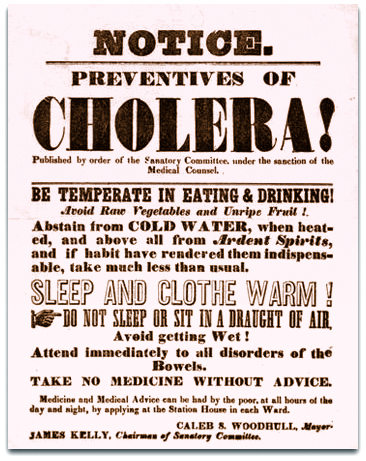
The hot summer of 1849 saw a cholera outbreak that caused 884 deaths in Merthyr, Dowlais and Aberdare.
And a report by health officials in 1893 paints a graphic picture of conditions in the Rhondda Valleys at the time.
"The river contained a large proportion of human excrement, pig sty manure, congealed blood, entrails from slaughterhouses, the rotten carcasses of animals, street refuse and a host of other articles....in dry weather the stench becomes unbearable." |