| In
the first Wigan World of the New Year, I take you to foreign places, To Westhoughton.
And without shame, I admit that
I wept when I read this port in a new book which details the life of the district
and the terrible disaster at a pit there.
I
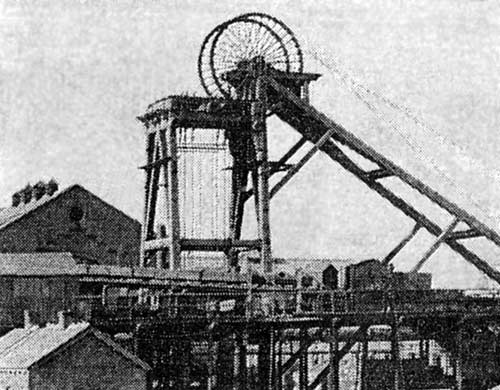
had known of the explosion at the Pretoria Colliery but - locally overshadowed
by the disaster at Abram's Mapole pit - I had never considered it in depth.
What caught my eye was a report
that after the disaster in Westhoughton, there were so many funerals that one
bride groom had to be married at five in the morning.
 Doesn't
that bring it all home? Doesn't
that bring it all home?
The disaster underground happened between Christmas 1910 and New Year's day 1911, different cemeteries in Westhoughton presented "appalling sights".
The words of rector Coelenbier of Sacred Heart on January 1, 1911.
He was to add: "No-one will ever forget the sights . . . the hearses, the mourning coaches, the long funeral processions, then throngs of bereaved widows and orphans, relatives and friends, the hundreds of visitors, all of them making their way to the last resting places.To
see the people in tears, to hear the sobbing and sighing of the wives and children,
brothers and sisters, was something beyond human endurance."
In
all there were 336 deaths and an eye-witness at the time said the explosion caused "smoke and fumes to belch like a living volcano out of the two shafts, flinging
the timber and debris into the air, some to land on the adjoining winding house,
followed by a huge cloud of dust which settled over the surrounding area.
"The ground around the
pithead vibrated and the dull, heavy roar was heard for up to four miles around."
At the time almost 900 men were
working underground - only four bodies were unidentified.

Jim Staveley was the only survivor of Pretoria Pit Disaster
The Disaster |